


Foreign ministers from the Association of Southeast Asian Nations (ASEAN) met in Malaysia to push for peace between Thailand and Cambodia after deadly border clashes. The fighting, over disputed territory, has killed scores of soldiers and displaced hundreds of thousands of civilians. Malaysia, the current ASEAN chair, is leading diplomatic efforts with cautious optimism. Ministers discussed reviving a ceasefire and de-escalation steps, including satellite monitoring and dialogue. The meeting marks ASEAN’s first direct high-level engagement since hostilities reignited earlier in December. Regional leaders hope sustained diplomacy will prevent further conflict and restore stability.
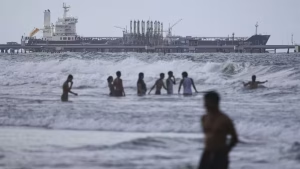
U.S. COAST GUARD CHASES VENEZUELAN OIL TANKER
The U.S. Coast Guard is pursuing a sanctioned Venezuelan oil tanker near international waters as part of an aggressive campaign to enforce U.S. sanctions on Venezuela’s oil industry. The vessel, linked to sanctions evasion networks, is the third tanker Washington has targeted in recent days. The move is tied to broader U.S. pressure on Caracas’s oil exports and geopolitical leverage in Latin America. Venezuela’s president called the action “piracy” and urged naval protection for sanctioned tankers. The pursuit escalates tensions in the Caribbean and the Atlantic, with possible impacts on oil markets and U.S.–Venezuela relations.

SWEDEN AND GERMANY CUT FOREIGN AID TO FUND UKRAINE SUPPORT
Sweden and Germany announced major cuts to their foreign aid budgets, redirecting funds toward defence and support for Ukraine. Sweden will cut billions from development programmes, and Germany will halve its humanitarian aid budget. The shifts reflect a growing European focus on military readiness amid the war in Ukraine and rising geopolitical instability. Aid to countries in Africa, Asia and Latin America will be reduced, sparking criticism that global humanitarian efforts may weaken. Aid groups warn that cuts will harm vulnerable communities and undermine long-term development goals, even as governments prioritise security and regional defence partnerships.

BANGLADESH SEES MASSIVE VIOLENT UNREST
Bangladesh is experiencing widespread political violence and unrest after the death of a youth leader, Osman Hadi, who was shot earlier this month. His supporters attacked media offices, political party buildings, and even the Indian High Commission amid tensions over alleged anti-India sentiment. Demonstrations, arson and clashes have spread across the capital Dhaka and elsewhere, leading to casualties and extensive property damage. The government deployed additional security forces as protests intensified. International organisations, including the United Nations, called for calm and respect for rights during the unrest, while press freedom groups expressed alarm over attacks on newspaper offices.

GERMANY’S MERZ PUSHES BERLIN AS GEOPOLITICAL POWERHOUSE
German Chancellor Friedrich Merz is campaigning to establish Berlin as a major geopolitical centre in Europe, especially on issues like the Ukraine war. He proposed using frozen Russian central bank assets as reparations for Ukraine, but the plan was rejected by other EU countries due to legal concerns. Instead, a €90 billion loan package for Ukraine was adopted. Merz emphasised Europe’s need for strategic independence from the U.S. and signalled plans for higher defence spending and possible military conscription. His ambitions have sparked debate at home, where voters are divided over foreign policy priorities.

UKRAINE DEMANDS FROZEN RUSSIAN ASSETS
Ukrainian President **Volodymyr Zelenskyy is pushing EU leaders to use billions in frozen Russian assets to help fund Ukraine’s reconstruction after years of war. The proposal seeks to legally transform seized Russian state funds into support for rebuilding infrastructure, defence and social services in Ukraine. The plan’s legal complexity has drawn debate among EU states about international law and property rights. Advocates say unlocking these funds could speed economic recovery and reduce reliance on external debt, while critics caution against legal challenges and diplomatic fallout. The move highlights the intersection of finance and geopolitics in the Ukraine conflict.


